


Why Food Chemistry patents face higher legal scrutiny: the innovation surge behind your plate

A wave of innovation in Food Chemistry
Over the last decade, the food industry has changed dramatically. Consumers now expect more from what they eat. Foods must not only nourish, but also support gut health, align with sustainable values, and address (medical) conditions like weight management. This shift has driven a surge in scientific breakthroughs in food chemistry, accompanied by a steady increase in patenting activity.
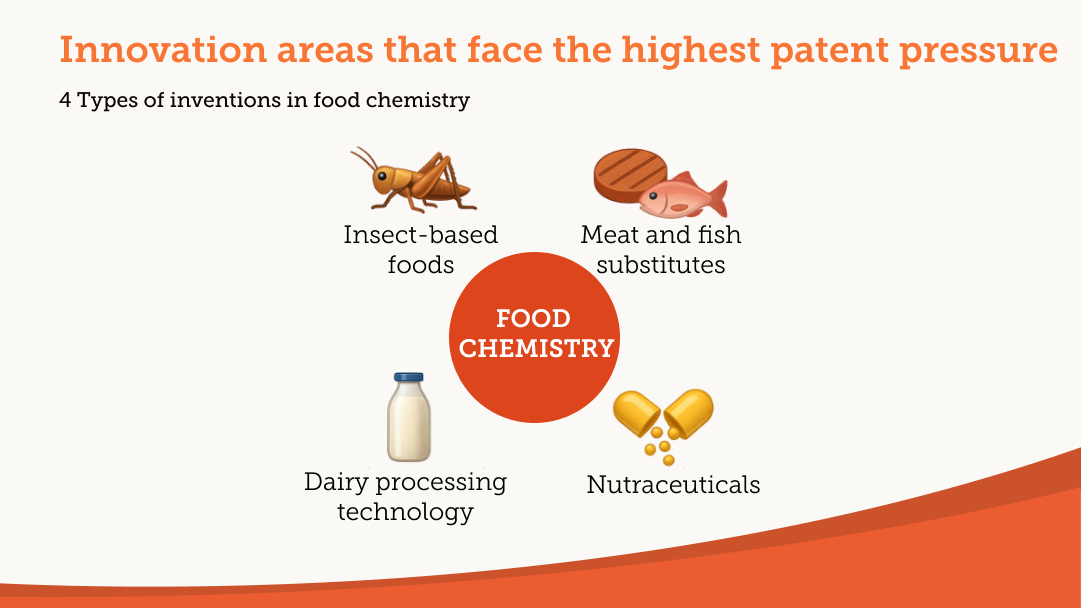
Most patent applications for food chemistry innovations fall in IPC class A23. This class includes a wide range of food-related inventions, such as dairy proteins, alternative meats, functional beverages, and nutritional supplements.
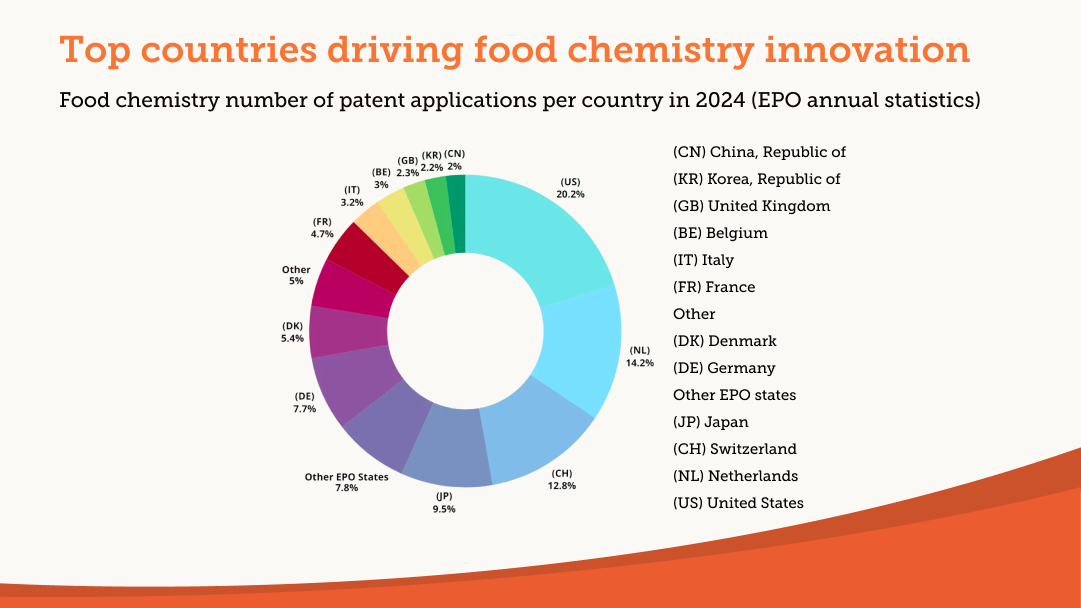
According to the statistics published by the EPO, the number of patent filings in food chemistry has risen every year since 2015. Patent applications in this field are filed by large multinationals as well as SME companies and sole inventors. Applicants from the United States, the Netherlands, China, and Japan lead the way. Notably, the Netherlands ranks among the top contributors, reflecting strong innovation and IP engagement at the national level.
A 13% opposition rate: Food Chemistry patents are under pressure
Despite, or possibly due to, this growth, food chemistry patents face a unique challenge. As much as 13 percent of granted European patents in the food chemistry field are opposed. That figure is more than triple the EPO average across all technical fields, which stands at just 4%.
Within the technical area of chemistry, which is itself a hotspot of opposition activity, the sub-field of food chemistry is the most opposed category. This trend highlights how valuable and contested innovations in this field are.
Factors contributing to the high opposition rate in food chemistry include:
- Intense commercial competition in food and beverage innovation
- Close overlap between similar product formulations
- High economic value attached to patent-protected food products
- Broad and complex claim language under IPC class A23
What happens when a European patent Is opposed?
Opposition proceedings begin when an opponent formally challenges a granted patent at the EPO. A Notice of Opposition should be filed within nine months of the grant of the patent. The patent owner and the opponent(s) can plead their cases before a neutral Opposition Division, which is established by the EPO. The Opposition Division decides the fate of the patent, however that decision can be appealed before the Board of Appeal. The possible outcomes can be significant for the owner of the patent or the opponent(s):
- About one-third of the opposed patents are revoked
- About one-third of the opposed patents are maintained in limited form
- About one-third of the opposed patents are upheld as granted (in other words, the opposition is rejected)
In food chemistry in particular, opposition proceedings often involve multiple opponents, each with a vested interest in shaping the outcome. The process requires strong legal strategy and deep technical expertise, both at the side of the opponent and at the side of the patent owner.
Prepare and protect
Given the elevated risk in this field, food innovators should think beyond the initial patent filing, anticipating possible future challenges such as opposition. A robust IP strategy in food chemistry innovations includes:
- Careful drafting of patent applications, anticipating competitive challenges (e.g. including appropriate fallback options)
- Targeted freedom to operate (FTO) assessments before market launch
- Experienced representation during prosecution and opposition
- Monitoring similar filings and competitor activity
At NLO, we help clients build these strategies. We are the only patent attorney firm based in the Netherlands ranked among the top 10 EPO filers in food chemistry, and we attend around 50 food chemistry opposition hearings a year. We also have extensive experience with navigating cases in the appeal stage.
Ready to strengthen your IP?
Innovation in food chemistry is accelerating, and so are the legal risks. With a 13% opposition rate, it is a significant risk to overlook IP vulnerabilities.