


Alternative proteins and patents: trends and legal risks
Alternative proteins are fueling patent growth
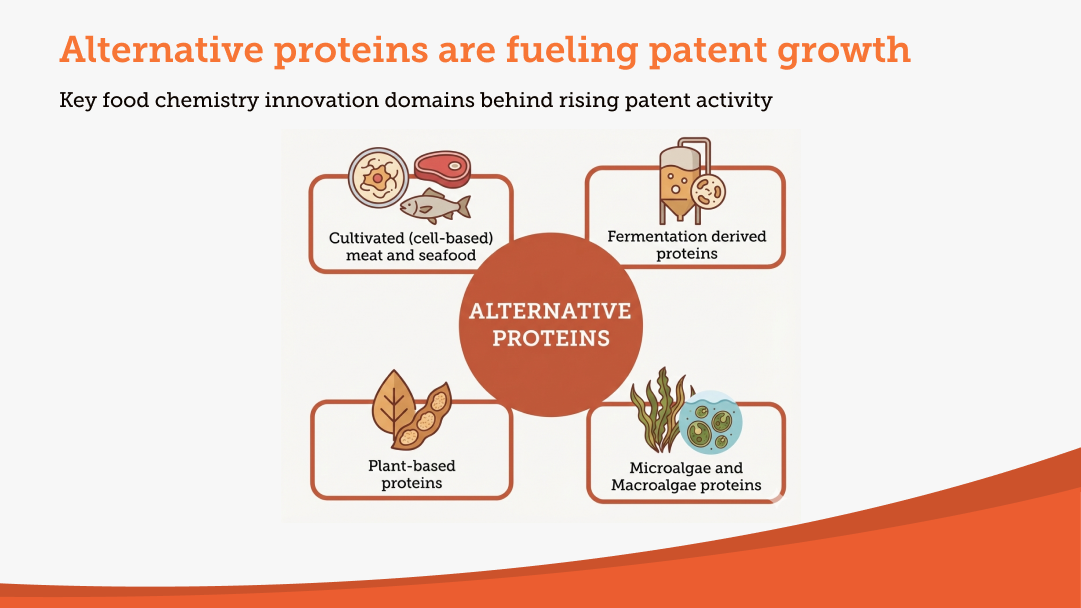
The rise of alternative proteins is one of the most important current developments in the food industry. Consumers look for sustainable, ethical, and health-conscious food options, and innovative food companies are participating in this ever-growing demand, racing to develop alternatives to meat, dairy, eggs, and seafood.
These innovations depend heavily on food chemistry. Whether mimicking the structure of meat using plant-based proteins, producing dairy alternatives through precision fermentation, or stabilizing functional ingredients for texture and flavor, each step involves technical know-how and scientific research.
To protect that investment, companies are turning to intellectual property.
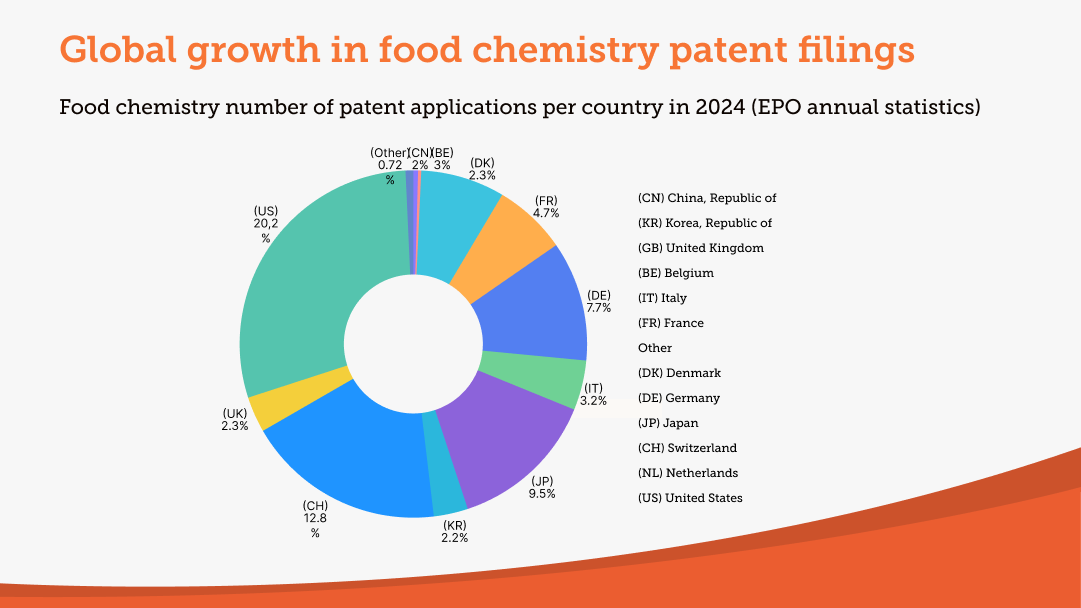
Patent filings in IPC class A23, which covers food and food treatment technologies, have grown steadily over the past decade. Innovations in alternative proteins now make up a significant part of that growth. Applicants from the United States, the Netherlands, China, South Korea, and Japan are among the most active. In 2024, the United States and the Netherlands were the top two filing countries in food chemistry at the EPO.
A fast-growing sector with high legal risk
Despite this strong patenting activity, the legal environment around food chemistry is becoming more complex. Patents in this field face a 13% opposition rate at the EPO. This is significantly higher than the average across all technology sectors, which stands at just 4%.
Applying the knowledge that 2/3rd is revoked or partially revoked, that means about 8-9% of the food patents lose (some of their) value after grant, and that compared to the overall limited 2-2.5% outside the field of foods.
Alternative protein patents are especially vulnerable for several reasons:
- The innovation space is crowded. Many companies are working on similar ingredients and processes.
- Patent claims often overlap, especially in areas like texture, flavour, nutritional enhancement and health benefits.
- The market is competitive and fast-moving. Legal conflicts can emerge quickly when product launches are at stake.
When the commercial value is high and technical differentiation is narrow, legal scrutiny increases.
What happens when a European Patent is opposed?
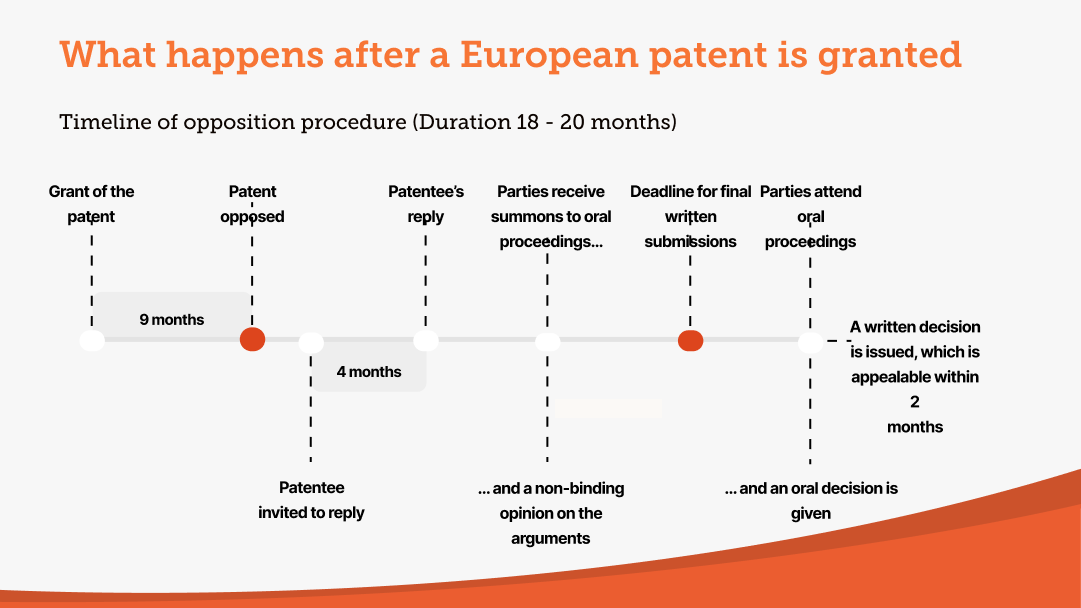
After a European patent is granted, opponents can file an opposition with a nine month window. Multi-party oppositions are also not uncommon, wherein several companies challenge the same patent.
Outcomes of opposition proceedings fall into three categories:
- About one-third of the opposed patents are revoked
- About one-third of the opposed patents are maintained in limited form
- About one-third of the opposed patents are upheld as granted (in other words, the opposition is rejected).
This means that achieving a patentable invention in the EPO’s eyes is not the end of the journey. Statistically only 1 out of 3 patents survives opposition without a scratch. A strong legal strategy is essential not just during prosecution, but throughout the patent's life.
For patentees, opposition is a completely different battlefield compared to examination. Once a patent is challenged with an opposition, as a patentee the atmosphere shifts entirely as the EPO once again scrutinizes the subject-matter of the patent in a different light. It then becomes essential to assess whether the representative who guided you through examination truly possesses the strategic and practical skill set needed for opposition because the qualities required differ significantly.
How NLO supports innovators in alternative proteins
At NLO, we work closely with innovative companies in the alternative protein space to secure and defend their intellectual property. Our team is experienced in all aspects of food chemistry IP, from patent drafting to opposition.
We support clients with:
- Careful drafting of patent applications, anticipating possible future challenges
- Freedom-to-operate (FTO) analyses for product development and launch
- Representation in opposition proceedings before the EPO, both as patent proprietor and opponent, including appeal procedures when necessary
- Use of advanced artificial intelligence search tools to identify hard-to-find prior art, to strengthen patent application and oppositions. One recent case involved an opposition that turned on prior art missed by conventional methods. Using AI search, we located a key document and built a strong argument that was able to challenge a problematic patent.
Paleo client case
Protecting what you build
Alternative protein innovation shows no sign of slowing down. The market continues to expand, but so do the risks. Filing a patent application is no longer enough. Protecting your investment requires a strategy that accounts for opposition, enforcement, and the competitive landscape.
Protix client case