

Inside the 13 percent: how NLO navigates food chemistry oppositions
Food Chemistry faces more oppositions than any other field
Innovation in food chemistry has increased rapidly over the past decade. This includes advances in medical nutrition, infant formula, dairy technologies, and plant-based alternatives. Patent applications concerning these technologies fall under IPC class A23, a broad class that covers many food-related inventions.
The rapid rise in innovation in the food chemistry sector has led to an increase in patent filing. But with more patents comes more conflict…
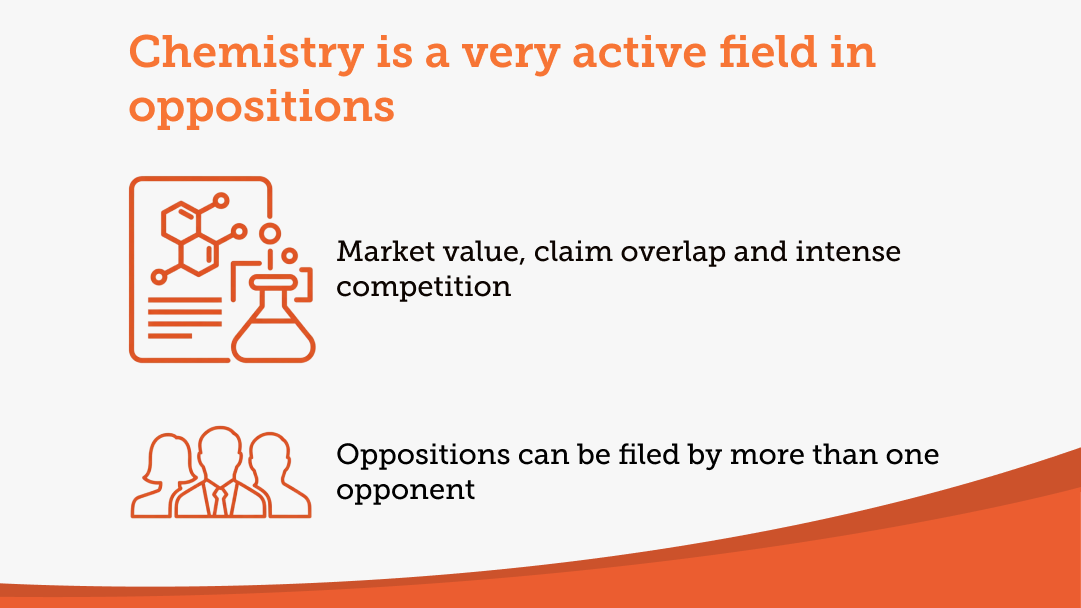
Data from the European Patent Office (EPO) show that the chemistry sector is the opposition hotspot, and within that technical area, food chemistry is the single most opposed subfield. This trend highlights how valuable and contested innovations in this field are.
Factors contributing to the high opposition rate in food chemistry include:
- Market interest is high. Food and beverage companies continuously release new products.
- Patent claims often overlap, especially in nutrition and formulation technologies.
- Multiple players working on similar ingredients or delivery systems.
- The competitive advantage of a granted (and upheld) patent can be significant.
This landscape leads to frequent oppositions. Often, more than one party is involved, making oppositions a delicate and complex procedure.
What happens during an opposition before the EPO?
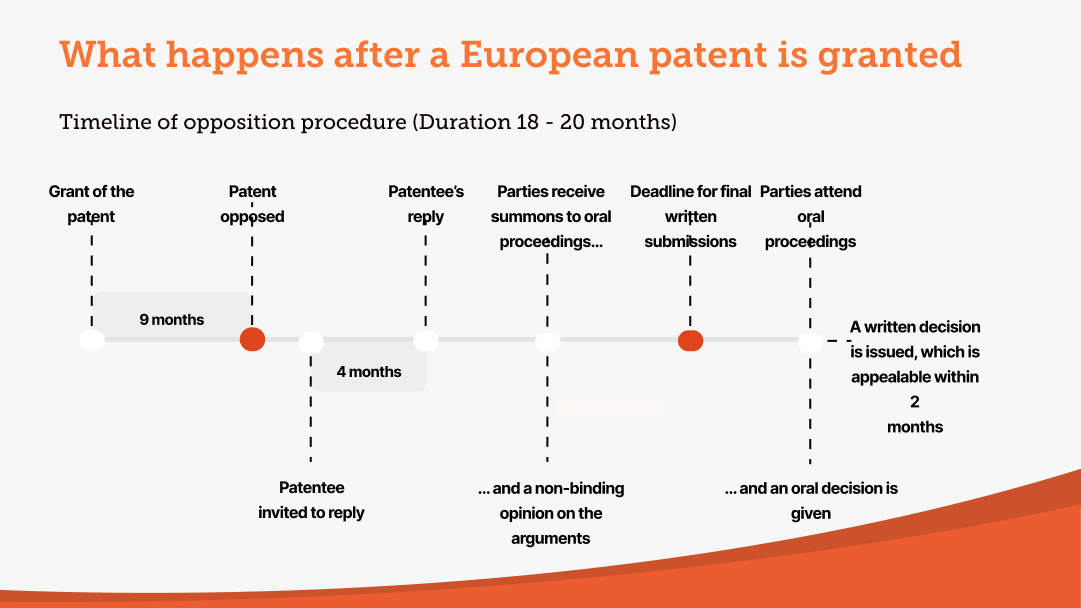
An opposition before the EPO is a legal procedure where a third party challenges the validity of a granted patent. Anyone can file an opposition to a European patent within nine months after grant by submitting a reasoned Notice of Opposition to the EPO. In food chemistry, oppositions are often highly strategic.
Outcomes are split into three possibilities:
- About one-third of the opposed patents are revoked
- About one-third of the opposed patents are maintained in limited form
- About one-third of the opposed patents are upheld as granted (in other words, the opposition is rejected)
This means that the odds of success are finely balanced. The strength of your legal team, your technical argumentation, and strategy during the opposition procedure can be the deciding factor.
For patentees, opposition is a completely different battlefield compared to examination. Once a patent is challenged with an opposition, as a patentee the atmosphere shifts entirely as the EPO once again scrutinizes the subject-matter of the patent in a different light. It then becomes essential to assess whether the representative who guided you through examination truly possesses the strategic and practical skill set needed for opposition because the qualities required differ significantly.
NLO’s experience in Food Chemistry oppositions
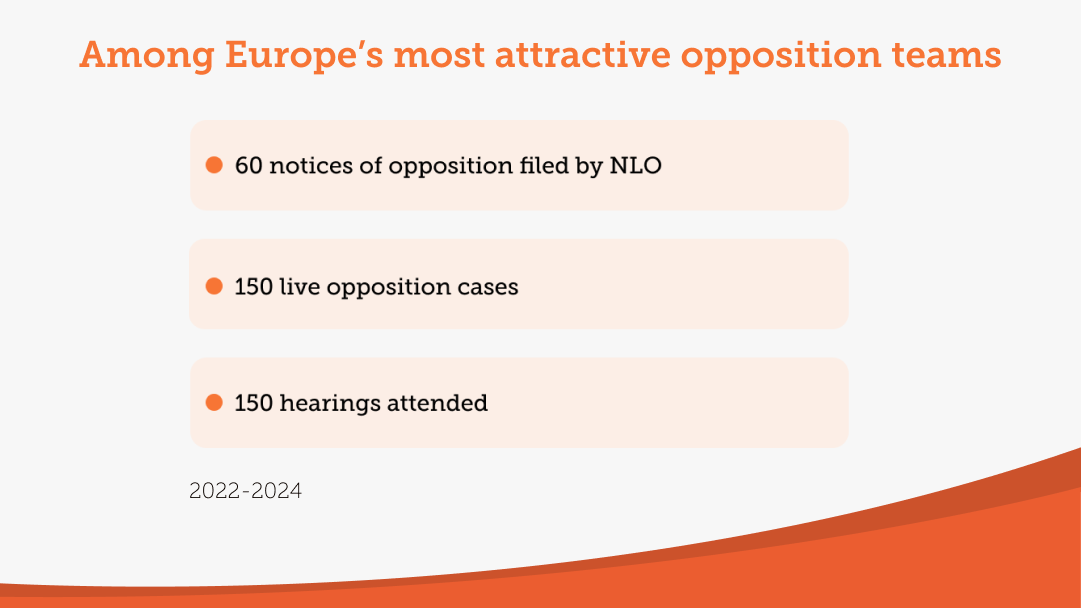
NLO is one of the most active firms in Europe when it comes to food chemistry oppositions. We represent both patent owners, defending their patents, and opponents, challenging the patents of others.
From 2019 to 2024, NLO ranked among the top 10 firms in Europe for handling food chemistry oppositions in IPC class A23. We are the only patent attorney firm based in the Netherlands to make that list.
NLO has among its ranks several specialized patent attorneys handling around 50 hearings per annum. These include both offensive and defensive cases, covering:
- Infant nutrition and formula
- Plant-based and alternative protein technologies
- Medical foods and targeted nutritional compositions
- Process technologies for dairy and beverages
Our clients range from multinational fast-moving consumer goods (FMCG) companies to fast-scaling food tech startups. We help them protect core inventions, respond to legal challenges, and build lasting IP strategies.
Case examples: NLO in action
The food chemistry team of NLO has a strong record of success in opposition and appeal proceedings before the EPO. Some of our recent highlights include:
Overturning an opposition decision on appeal: We regularly overturn decisions of the Opposition Division on appeal, resulting in the maintenance of patents as granted.
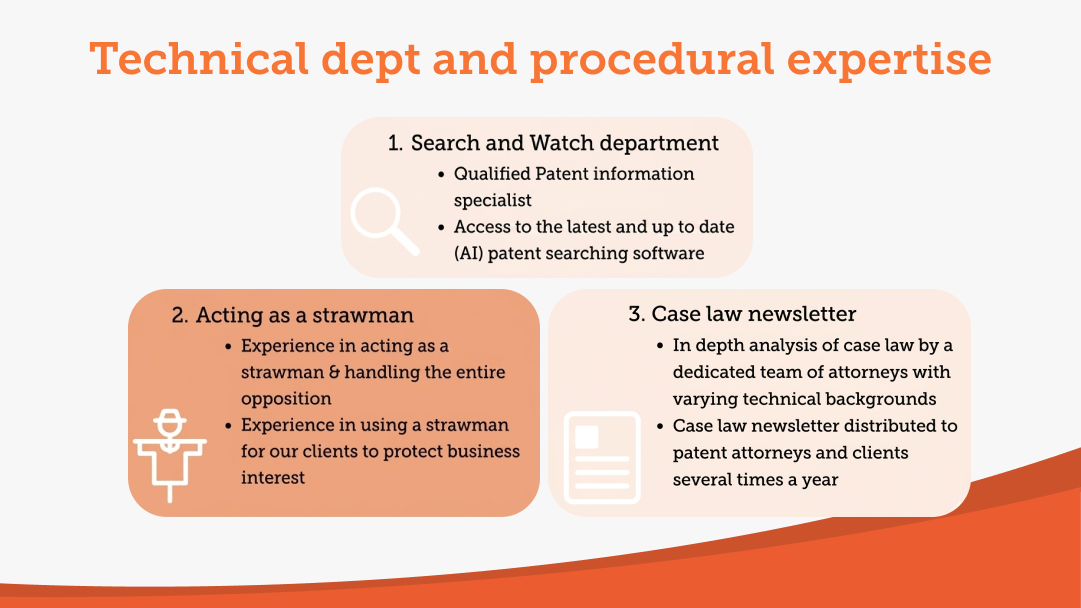
Using artificial intelligence (AI) search tools to strengthen an opposition: Our team used AI search tools to identify prior art that had not been uncovered through conventional methods. This allowed us to file a more effective Notice of Opposition.
- Shaping EPO case law: We were involved in several notable decisions which form part of EPO case law e.g. T 694/16, T 2173/22.
These examples show that success in food chemistry related oppositions depends on a combination of legal expertise, technical understanding, and innovative tools. NLO is equipped in all three.